
Standing in front of Bologna’s Etruscan finds, the first question in etruschi a bologna storia is simple: who built this city? Bologna was Felsina, an Etruscan town that grew out of Iron Age Villanovan roots.
- Who: the Etruscans, a people of central Italy whose core lay between the Tiber and the Arno and whose reach later extended north.
- What: Felsina was the Etruscan name of Bologna, a city on the northern fringe of Etruria in the Po Valley, later renamed Bononia by the Romans.
- How to read it: Bologna’s story has a Villanovan prologue, an Etruscan city, and a Roman and Celtic epilogue, and every date below is approximate.
Readers who want the people first can start with who were the etruscans of bologna, then return here to see how the pieces of the city’s history fit together.
Choose your route through Etruscan Bologna
This guide is built for different starting points. Some readers arrive with a museum visit in mind, some with a school question about origins, and some with a puzzle about why Etruscans appear so far north of Tuscany. The ordered routes below send each reader to the section and the detailed guide that fit the goal.
- You want the name and the city. Read the section on Felsina below, then open felsina etruscan bologna for the dedicated treatment of the name.
- You want the origins. Read the Villanovan section, then continue to villanovan culture bologna.
- You want dates in order. Use the etruscan bologna timeline after reading the phases summarised here.
- You want to compare Bologna with Tuscany. Go to the comparison section and its table, which sets Bologna’s evidence beside the heartland’s.
- You want trade and connections. Read the trade section, which covers what moved between Etruria and the wider Mediterranean.
The name explains why the city appears under two labels in books and museums, and the Villanovan background explains why Bologna was already an organised community before anyone called it Etruscan.
Who the Etruscans were and where they lived
The Etruscans were a people who, according to Livius, lived in the first millennium BCE in the area between the rivers Tiber and Arno. That definition matters for Bologna because it places the Etruscan core well south of the city. Bologna belongs to the story as a place the Etruscan world reached, not as the place it began.
Etruria and its cities
Etruria is the name given to the Etruscan homeland and its sphere of influence. Reference summaries describe its greatest extent as covering parts of what are now Tuscany, Umbria and Lazio, as well as parts of the Po Valley and Emilia-Romagna, as History Draft sets out. The practical lesson is that Etruria was not a fixed block on the map. A reader who equates the Etruscans only with Tuscany will miss the northern half of the picture, and Bologna is the clearest northern example.
A league, not a kingdom
The Etruscan League is easy to over-read. Livius argues that it cannot have been much more than a very informal, religious organisation of city-states. For Bologna, this is a useful corrective. Felsina should be pictured as one city among peers, with its own burial grounds, craft output and local identity, rather than as a provincial outpost governed from a capital. Questions about political control in Felsina are therefore best treated as questions about a city, not about a state. The same caution applies to religion: shared ritual connected the cities, which is why etruscan religion bologna is worth reading alongside the political picture.
Language and what survives
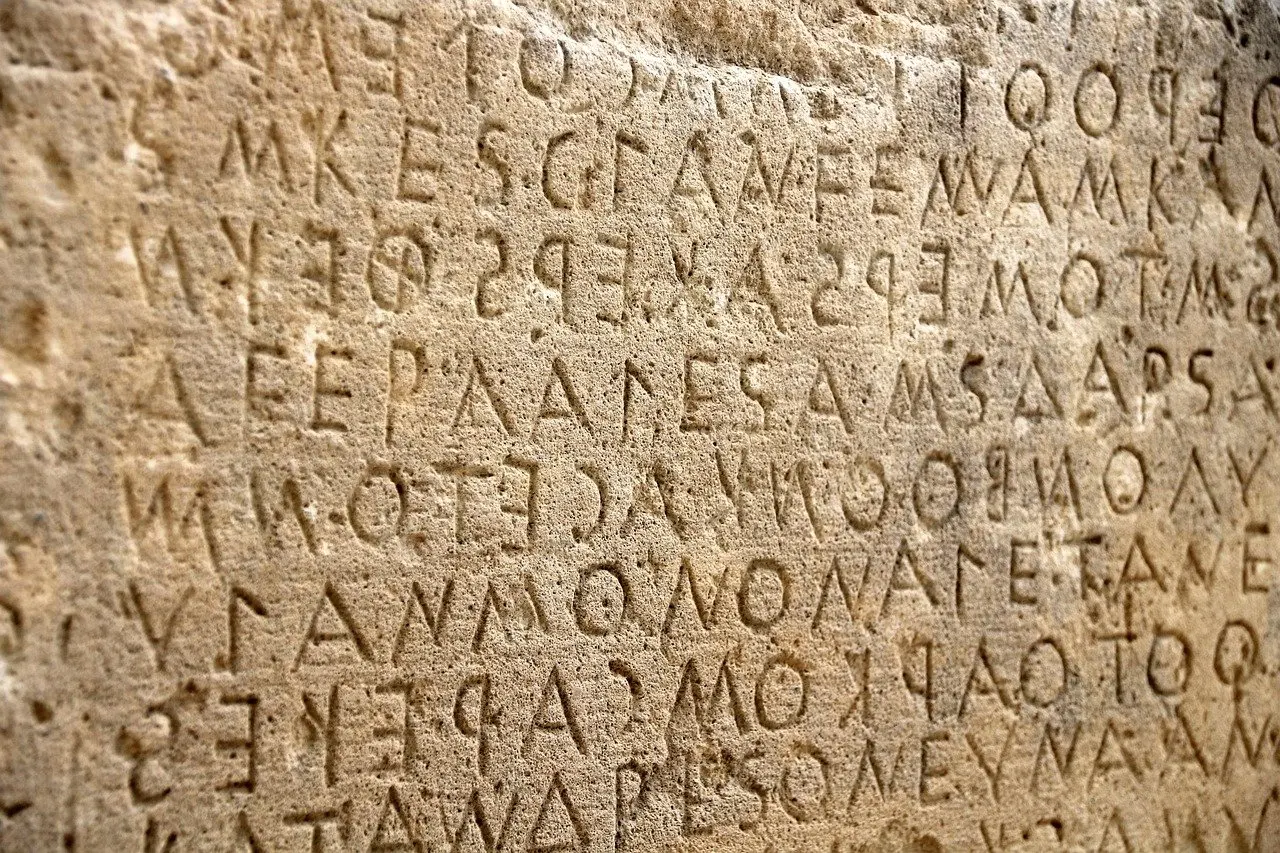
The Etruscan language survives in a large body of texts, yet it remains badly understood, as Livius notes. That limit shapes the whole subject. Historians of northern Etruria lean heavily on archaeology, meaning tombs, settlement traces, objects and monuments, because the written record cannot answer every question about daily life and belief. Readers who want to see how inscriptions from the Bologna area are handled can continue to etruscan inscriptions bologna.
Villanovan roots: Bologna before Felsina
The Villanovan culture is the earliest phase in Bologna’s story, and it explains why the city had a settled, burial-rich community before the Etruscan label applies. Livius dates the rise of the Villanova culture to the mid-ninth century BCE, while History Draft gives the culture as c. 900–700 BC and regards it as the earliest phase of Etruscan civilisation.
Dating the phase sensibly
The two framings are not identical, and that is normal for prehistoric periods that merge gradually. The safest reading is a broad Iron Age window rather than a single founding year. An Italian local-history summary on Bologna and the Etruscans says the city was founded during the Iron Age, between 900 and 700 BC, by a proto-Etruscan stock. Treat all three statements as one approximate range, and avoid quoting a precise start date for Bologna unless a specific excavation supports it. The Etruscan phases that follow are laid out step by step in the etruscan bologna timeline guide for readers who need sequence rather than overview.
How Villanovan people buried their dead
Burial is the main window onto this phase. Livius reports that the dead were cremated and buried in hut-shaped urns, or else buried without cremation. The Bologna area offers a large local example. At Villanova di Castenaso, a necropolis of over 350 tombs was excavated in 1853–1855, with burials both by cremation and by inhumation, according to the local-history summary above. A cemetery of that size, containing both rites, argues against a simple picture in which a single burial custom defines the whole community.
What changed when the city became Etruscan
Villanovan and Etruscan are best understood as stages of one story, not as rival peoples. The questions that matter are what continued, what altered and what arrived from outside. A focused answer is in villanovan vs etruscan, which is the right next step for anyone who finds the terminology confusing. Readers who stay with this guide should simply keep in mind that the earliest phase is described by History Draft as Villanovan, and that Bologna’s later Etruscan identity grew from it.
Felsina: the Etruscan city beneath Bologna
Felsina was the Etruscan name of Bologna. The Italian summary states that the Etruscans called the city Felsina before the Romans renamed it Bononia, and the two names remain the key to reading older and newer literature. A museum label that says Felsina and a Roman-era source that says Bononia are discussing the same place at different times.
Discovery and the museum
Much of what is known about Felsina came from nineteenth-century digging. Bologna’s Civic Archaeological Museum was inaugurated in 1881, according to the same local-history account, and it remains the natural anchor for anyone connecting objects to the city. Because the Villanovan excavation at Villanova di Castenaso belongs to the same period of discovery, it makes sense to think of Bologna’s Etruscan identity as something uncovered gradually through cemeteries first and settlements later.
City, plan and neighbours
Questions about streets, districts and layout belong with the felsina city plan guide. A natural comparison is with the northern Etruscan town known as Kainua near Marzabotto, and marzabotto vs felsina is the place to weigh the two. For social questions, such as who lived in Felsina and how, the relevant guide is etruscan daily life bologna.
Choosing what to read first
A reader interested in monuments should go to the burial material, because that is where Bologna’s evidence is richest. A reader interested in everyday life should begin with the city and society guides and treat tomb goods as indirect evidence. A reader whose question is only “what was Felsina?” already has the core answer: the Etruscan city on the site of present-day Bologna, with a Villanovan origin and a Roman successor.
Bologna and the Tuscan heartland compared
Bologna differs from the Tuscan heartland mainly in position and in the kind of evidence it offers. It lies in the Po Valley, outside the Tiber–Arno core described by Livius, and its best-documented remains begin with Villanovan cemeteries rather than the monumental tomb architecture associated with the heartland. The table sets some representative evidence side by side.
| Place | Setting | Evidence | Planning use |
|---|---|---|---|
| Villanova di Castenaso | Bologna area, Po Valley | Necropolis of over 350 tombs, with cremation and inhumation, excavated 1853–1855 | Best starting point for Villanovan burial practice near Bologna |
| Podere Tesorella, Casalecchio di Reno | Bologna area, Po Valley | Important traces of an Etruscan settlement | Shows that Etruscan evidence near Bologna includes living places, not only cemeteries |
| Civic Archaeological Museum, Bologna | Bologna | Inaugurated in 1881 | Fixes the museum in the same sequence of discovery as the Villanova excavation |
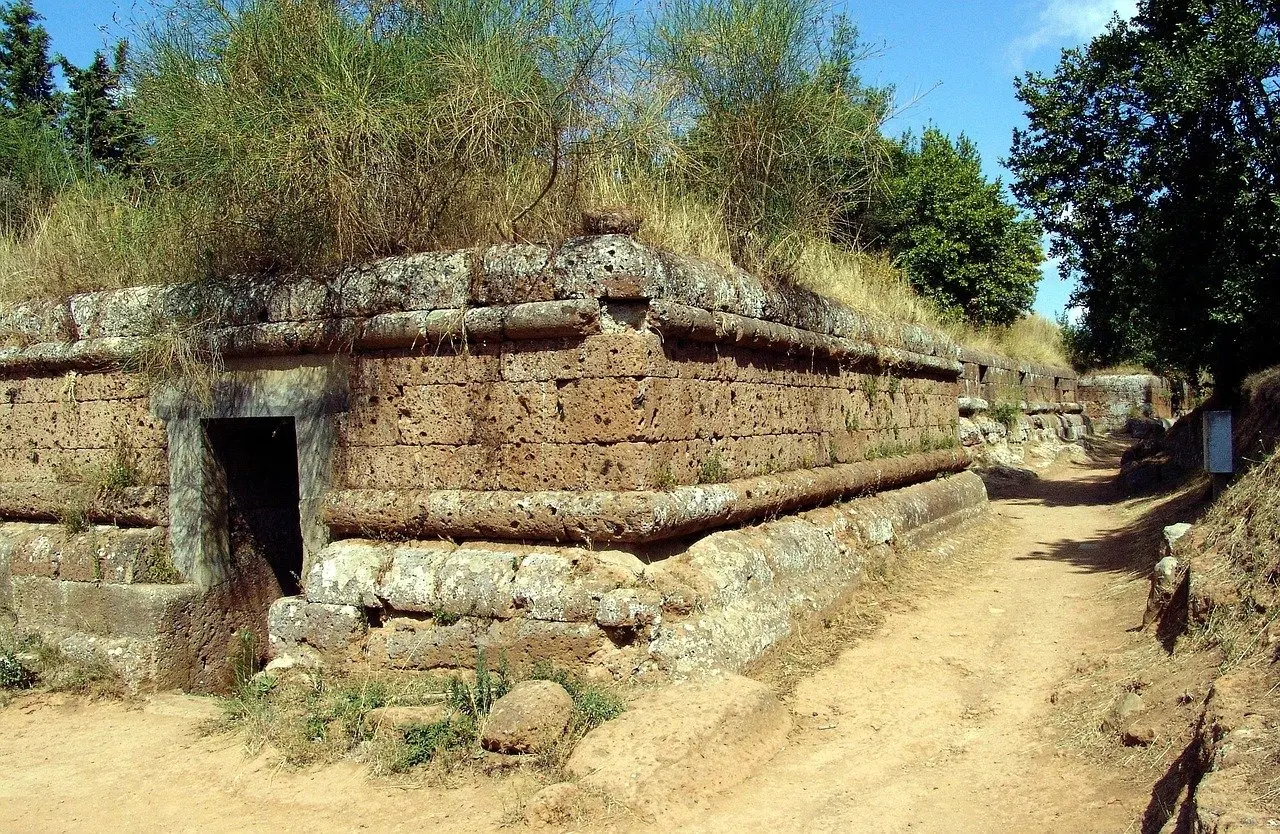
| Banditaccia Necropolis, near Cerveteri | Etruscan heartland | Monumental tombs dating back to the seventh century BCE | Benchmark for monumental burial in the south, useful when judging how Bologna differs |
The Bologna-area entries come from the local-history summary, and the heartland entry comes from Livius.
What the comparison does and does not show
The table supports a modest conclusion. Bologna and the heartland were part of the same wider civilisation, yet the surviving evidence is of different kinds. In the heartland, Livius points visitors to monumental tombs from the seventh century BCE at Banditaccia. Around Bologna, the evidence in this guide centres on a very large Villanovan cemetery and settlement traces. It would be a mistake to turn that contrast into a claim that Bologna was poorer or less developed, because the surviving record reflects what was excavated and preserved as much as what existed.
Where to go for Bologna’s burial grounds
Bologna’s cemeteries are the strongest local counterpart to the heartland’s tumulus tombs. A fuller account of them is in etruscan necropolis bologna, and the decorated bronze vessel known as the situla della certosa is a good example of how burial goods carry artistic information. For carved funerary monuments, felsina stelae is the matching guide.
How far Etruscan settlement reached into the Po Valley
Etruscan settlement reached the Po Valley through a gradual northward expansion, which Livius describes as the expansion to the north, to the plain of the Po. History Draft adds that at its greatest extent Etruria covered parts of what are now the Po Valley and Emilia-Romagna, alongside Tuscany, Umbria and Lazio.
What the Bologna area adds
Local evidence supports that regional picture. The Italian summary reports important traces of an Etruscan settlement at Podere Tesorella in Casalecchio di Reno, in the Bologna area. Together with the Villanovan cemetery at Villanova di Castenaso, this gives the Bologna district both burial and settlement evidence, which is a stronger basis for talking about an Etruscan presence than burials alone.
Using the word “extent” carefully
Extent is best read as a range of influence that changed over time, not as a fixed border drawn once. The word “gradual” in Livius is a reminder that expansion was a process. For a reader building a map, the safest approach is to mark Bologna and the sites around it as the northern Etruscan cluster, to mark the Tiber–Arno area as the core, and to avoid drawing a hard line between them.
Trade and routes across the Apennines
Etruscan trade connected metal-rich Etruria with Greece and with more distant suppliers, and Bologna sat on the northern side of the mountains that separated it from the Tuscan heartland. The overview below follows the general Etruscan trade picture, and the Bologna-specific economy has its own guide at etruscan bologna trade.
Metals, wine and amber
According to Livius, in the eighth century BCE the Etruscans received wine from Euboea in exchange for metal. In the seventh century, amber from the Baltic and precious objects from Phoenicia reached Etruria. The pattern is of an economy that sent out raw material and drew in luxury goods and drink, and the arrival of such goods is one reason elite burials are so informative about wealth and contacts.
Crossing the mountains
A trade question specific to Bologna is how goods and people crossed the Apennines between the Po plain and the Tuscan side. Livius supports the general trade picture above, and the passes themselves are the subject of etruscan routes across the apennines. The sensible way to use the trade evidence here is as context. Etruscan commerce reached the Mediterranean, and Bologna’s place on the northern side of the mountains is a reason to study the routes separately instead of assuming they matched the coastal ones.
The end of Etruscan Felsina: Rome and the Celts
Etruscan Felsina did not disappear in a single event, but the name changed when Rome took over, and the Romans called the city Bononia. The Celts (Boii) belong to this late chapter of the northern Etruscan world, and the evidence in this guide ties Celtic groups to the Etruscan side through alliance with Etruscan cities against Rome.
The Roman victory
The date gives a firm late marker for the independent Etruscan cities, even though the later history of Felsina specifically needs its own guide. Because the Etruscan League was only a loose religious organisation, as noted above, a defeat of several cities did not collapse a central state. It marks the point at which Rome’s power decisively outweighed that of the Etruscan cities and their allies.
From Felsina to Bononia
The renaming is the clearest sign of continuity and change together. The same place carried an Etruscan name first and a Roman name afterwards, as the local summary notes. For a reader, the practical consequence is to expect both names in literature and to treat them as labels for successive eras of one city.
Reading the evidence and choosing next steps
The northern Etruscan world is easiest to understand by combining three kinds of evidence. Cemeteries show how people were buried and, indirectly, what they valued. Settlement traces show where they lived. Written and trade evidence places them in a wider network. Each has gaps, and the strongest conclusions rest on where they overlap.
- For a first overview: use this page and then who were the etruscans of bologna only if the opening summary left questions about identity.
- For dating and sequence: the approximate ranges above are enough to orient, but anyone building a chronology should compare the sources’ framings rather than adopt a single year.
- For comparison with Tuscany: focus on the kind of evidence each region offers, as the table shows, instead of ranking one above the other.
- For further reading: follow the spoke guides in the order that matches the question, with burials and monuments for material culture and trade for connections.
The main judgement to carry away is simple. Bologna is best understood as a northern Etruscan city with Villanovan origins, a Roman successor name and a body of evidence that differs in kind, not in importance, from that of the heartland.
Frequently asked questions
| Question | Answer |
|---|---|
| How much of the Etruscan language survives? | The language is known from more than 9,000 texts, but Livius describes it as badly understood, so archaeology still carries much of the interpretation. |
| Which metals did the Etruscans export to Greece? | Livius lists silver, copper, iron, lead, zinc and tin among the metals exported to Greece. |
| When did Rome defeat the Etruscan cities and their Celtic allies? | Livius places the defeat at Sentinum in 295 BCE, when the Romans overcame several Etruscan cities and their Celtic allies. |